
Run a real organisation while you are still a student
In a job interview they will ask you to talk about a time you had a budget and lived with what it cost. A lecture does not give you that story. A club does — a team, money, deadlines and your signature under the decisions. And everything you do here is visible to whoever hires you next.

You leave here with experience you can show
An employer does not check how many lectures you sat through. They ask what you actually ran and how it turned out. In a club you run real things: money, people, deadlines, and the consequences when something fails. Every one of them stays on the record — with a date, a project, and the person who confirmed it.
A club that does not die with you
You take the club over and find an org tree, a budget and a handover procedure. No folder from three past presidents that nobody can unlock any more. When you leave, the next person finds the same — keeping the organisation alive is the part of leading that nobody teaches.
Competencies you can point at
Every recorded activity and every finished objective lands in a named domain with its proof attached: who confirmed it, and when. Two years in, you have a map you can open on your phone in an interview. A transcript does not do that.
The part AI will not take from you
Machines already do the repetitive work, and the first rung of the career ladder is shrinking because of it. What is left is judgement: two people disagree, the event is in a week, and the call is yours. No lecture teaches that — only the moment the responsibility is yours, and so is the mistake.
How a club becomes a member of the network
Four steps. Not about you — about the club. Nobody will sell you membership: you earn it, and the whole way there is visible in public.
- Applicant
Students gather a team and submit an application. The club has not started the candidate path yet.
- Candidate
The club works against the membership standard — governance, finance, communication, continuity — and the whole way there is visible to anyone who opens the club's page.
See the clubs → - Member
Every candidate requirement is met and verified. The club holds full rights in the network, and a vote.
See the clubs → - Founding
A club the network began with. The same standard, without the candidate path.
See the clubs →
The network map
Every club here stands where it earned its place, and anyone can see how far it still has to go. Want to see what a club that has done it looks like? Open any of them.
Your problem is not new. Somebody has already studied it.
When something jams in the club, you do not have to start from nothing. Every tool here rests on a specific work — author, year, source — and every one of them says what you can do about it this week.
Loading the foundations…
Every work carries a summary, a bibliographic record, a link to the source and a “what to do this week”.
The whole library of foundations →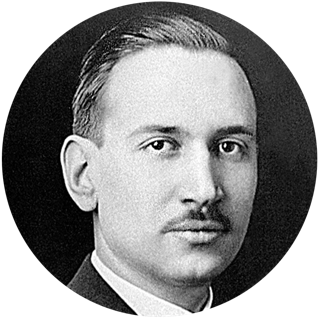
The man who calculated management
Vytautas Andrius Graičiūnas was a Lithuanian-American management theorist who taught at Vytautas Magnus University from 1945 to 1948. His 1933 paper “Relationship in Organization” showed that the number of relationships a manager holds grows far faster than the team itself — and the same number runs inside every GSLK club's org tree.
Why this matters to a president: once there are more relationships than you can hold, people start waiting on a reply you never send — and the club quietly comes apart. A good leader notices and splits the work; a weak one keeps it all and calls it responsibility.
Who he was, and why that number matters to your club.
Who actually did what
Anyone can open your profile — a lecturer, a partner, whoever hires you next. It shows only what you did, and the person who confirmed it.
Every club's agenda in one place
What is happening in the network
Your club could be next
Gather a team and submit an application. From day one you have every tool in the network, clubs that have already walked this path, and public progress — visible to you, to your club, and to anyone who comes to look.
- Every tool in the network
- Clubs that have done it
- Public progress