Kouzes & Posner: the Five Practices
"Am I a leader?" is a question you will never answer honestly. "What did I do last month?" you can answer in a minute — and that is the kind of question the gslk conversations ask you.
Five behaviours you can watch from the outside and repeat next Thursday. Kouzes and Posner say that is all leadership is, and that it is available to ordinary people.
Instead of rating yourself one to five, write one specific case from the last four weeks: what you did, when, and what changed because of it. That is the evidence you can show later.
Do not overdo this part: Independent researchers argue about whether there are really five practices or one. For a club it changes nothing: the useful part is behaviour you can name. The number five helps nobody.
James M. Kouzes and Barry Z. Posner (Leavey School of Business, Santa Clara University) began the research in 1983. Their method was the Personal-Best Leadership Experience Survey: 38 open-ended questions asking respondents to narrate a time they led at their best. The initial corpus was more than 550 long-form surveys (each taking one to two hours), around 80 short-form questionnaires and 42 in-depth interviews; thematic analysis of those narratives produced the five behavioural clusters. The first book, The Leadership Challenge (Jossey-Bass, 1987), has run to seven editions.
The full biography is on the public version →
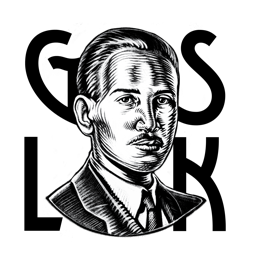
No freely licensed likeness of this person exists, so this is a generated emblem. It is not a portrait.
This answers a specific design question: why the gslk coach asks rather than answers. You cannot give a checkable account of a trait — you can of a behaviour. When leadership is described as five things people do, each becomes a question whose answer is a fact from the student's own project rather than a self-rating. In gslk's architecture those answers are exactly what becomes evidence — augmentation, not automation.
These screens carry out this specific work. Every published work in the library also has at least an exercise — it is at the foot of this page.
- The exercise at the foot of this page turns the fourth practice — Enable Others to Act — into one written sentence: who decides what, up to what amount, without you, starting today.
- The other four are the frame for the AI coach's questions, and the programme has not written a single one of those questions yet.
- The coach rail on /admin runs, and the layer through which the programme can put its own questions to the coach is built — empty, but built.
- The coaching principle generally: the AI raises questions and drafts, a human approves, and it is always visible that it is AI.
- Programme module 1: "Self-knowledge and leader identity".
Kouzes, J. M., & Posner, B. Z. (1987). The Leadership Challenge: How to Get Extraordinary Things Done in Organizations. San Francisco: Jossey-Bass.
- Open the source
- In copyright
These works are related to the one you just read — and not by accident:
same competency: Mobilising others
same competency: Mobilising others
same competency: Mobilising others
same competency: Mobilising others
Opens in the member workspace — you need to be signed in.
The same work written at length: what it claims and what its evidence is worth.
Links to publishers and libraries. There are no links to unauthorised copies here, and there will not be.
Links open in a new window.