
Aristotle's Politics: community, the common good, and the limit money does not have
The board talks only about sponsors and numbers. Then somebody asks who the club is useful to besides its own members, and the table goes quiet.
The shared drive nobody tidies. Aristotle noticed it back in Book II — what is common to many is taken least care of — and puts two more things beside it: the capacities that appear only among other people, and the limit provisioning has and money-making does not.
At the next board meeting get one written sentence from everyone: who is this club useful to, besides us? No numbers and no using the word "sponsor". If the sentences differ, you have found the term's most important job.
The full biography is on the public version →
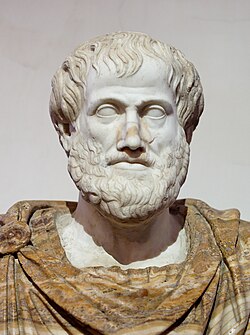
Marble bust, a Roman copy after a bronze by Lysippos. Palazzo Altemps, Rome. PD-self (photograph, Jastrow 2006) + PD-art-70-3d + PD-old-auto (sculpture)
These screens carry out this specific work. Every published work in the library also has at least an exercise — it is at the foot of this page.
Loading…
These works are related to the one you just read — and not by accident:
shared competencies: Impact and responsibility, Mobilising others
shared competencies: Impact and responsibility, Mobilising others
shared competencies: Mobilising others, Economics of the organisation
shared competencies: Impact and responsibility, Economics of the organisation
Opens in the member workspace — you need to be signed in.
The same work written at length: what it claims and what its evidence is worth.
This text is freely available, so the links go straight to it rather than to a summary of it.
- Perseus — the Politics in Greek and English, from Book 1
- Stanford Encyclopedia on Aristotle's Politics
Links open in a new window.