Katz: the three skills of an administrator
You are excellent at what you can do and you avoid what you cannot — until the post requires it. The gap between what the post demands and what you do can be learned shut; it has nothing to do with character.
Every autumn the best organiser becomes president and gets worse — Katz explains why: a higher post needs a different mix of three skills, and a surplus of the old one now gets in the way.
- Technical skillThe budget, the sound, the sign-in desk. Decisive at the lowest levels.
- Human skillNeeded about equally at every level. Visible between meetings, not in them.
- Conceptual skillThe whole picture: how you look from the faculty's side, and where you are in two years.
At the meeting give each board member 10 points across three skills — technical, people, big picture — and ask them to split the points by what the last four weeks actually demanded. Then the same 10 again by what they think the post demands. The gap between the rows is the next meeting's agenda.
The full biography is on the public version →
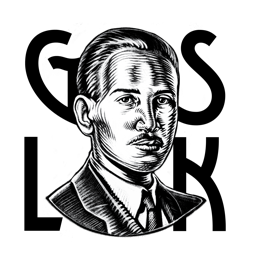
No freely licensed likeness of this person exists, so this is a generated emblem. It is not a portrait.
These screens carry out this specific work. Every published work in the library also has at least an exercise — it is at the foot of this page.
Loading…
These works are related to the one you just read — and not by accident:
shared competencies: Self-command, Mobilising others
shared competencies: Self-command, Mobilising others
shared competencies: Self-command, Mobilising others
same competency: Mobilising others
Opens in the member workspace — you need to be signed in.
The same work written at length: what it claims and what its evidence is worth.
Links to publishers and libraries. There are no links to unauthorised copies here, and there will not be.
- Harvard Business Publishing — the 1974 HBR Classic reprint with the author's retrospective
- ERIC — the bibliographic record and abstract
Links open in a new window.