
Marcus Aurelius: what is in your power
After a bad event the team spends an hour on the weather, the timetable and the other society. You will change none of those next time.
An emperor had to talk himself out of bed every morning. Three moves: sort what depends on you, separate duty from mood, and grant in advance that other people will be as they are.
After your next event, draw a line down a page: left, what you decided; right, what you did not. Discuss only the left, and pick one thing from it to do differently.
The full biography is on the public version →
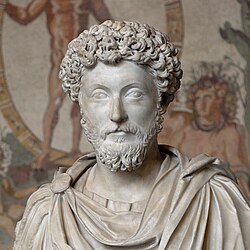
Marble bust, 2nd century. Glyptothek, Munich. PD-old (sculpture) + PD-self (photograph, Bibi Saint-Pol 2007)
These screens carry out this specific work. Every published work in the library also has at least an exercise — it is at the foot of this page.
Loading…
These works are related to the one you just read — and not by accident:
shared competencies: Self-command, Judgement
shared competencies: Self-command, Judgement
shared competencies: Self-command, Judgement
shared competencies: Self-command, Judgement
Opens in the member workspace — you need to be signed in.
The same work written at length: what it claims and what its evidence is worth.
This text is freely available, so the links go straight to it rather than to a summary of it.
Links open in a new window.