Bandura's self-efficacy
Encouragement lasts a few hours. One genuinely difficult thing you got through lasts a year — which is why gslk asks questions instead of handing you answers.
Encouragement is the weakest of the four sources of self-efficacy. The strongest is when you did it yourself, it worked, and you credited your own capability rather than luck or an easy task.
- Enactive masterythe strongest: you did it, it worked, and you credit your own capability
- Vicarious experienceseeing someone similar to you succeed
- Verbal persuasionthe weakest, though it can lower efficacy easily enough
- Physiological statehow you read arousal, fatigue and mood before you go on
Pick one thing you avoid because you "can't do it" and this week do the smallest version of it: one call, one slide. The point is not the result, it is having your own case to point at.
Albert Bandura was a psychologist at Stanford University and one of the most influential social psychologists of the twentieth century; he died in 2021. He introduced the concept of self-efficacy in a 1977 Psychological Review paper, arguing that psychological interventions of every kind work through one common mechanism — a change in beliefs about one's own capability. The fullest statement is his book Self-Efficacy: The Exercise of Control (1997).
The full biography is on the public version →
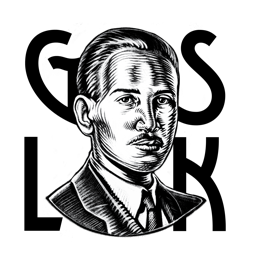
No freely licensed likeness of this person exists, so this is a generated emblem. It is not a portrait.
It underpins two gslk decisions. First, why the coach asks rather than answers: an answer a person has formulated themselves is attributed to their own capability, while one handed to them is not. Second, why finished projects with evidence sit at the centre of the product rather than attendance badges: mastery experience is the strongest source, and an attendance badge is not a mastery experience.
These screens carry out this specific work. Every published work in the library also has at least an exercise — it is at the foot of this page.
- The exercise at the foot of this page — one genuinely hard thing you finished, and who can confirm it. That is enactive mastery, written down where it survives.
- Beyond that, this idea is the reason the other screens are designed the way they are.
- Why the AI coach raises questions instead of supplying answers — alongside the Kouzes and Posner practices.
- Why the project portfolio with evidence and peer endorsement sits at the centre of the product rather than attendance badges: mastery experience, not encouragement.
- Why the coach is designed to surface a person's own finished projects when they hit a new difficulty. The coach itself runs — the rail is on /admin and the conversation works — but this particular behaviour is not in it yet, and no finished projects have been recorded so far.
Bandura, A. (1977). Self-efficacy: Toward a unifying theory of behavioral change. Psychological Review, 84(2), 191–215. — Bandura, A. (1997). Self-Efficacy: The Exercise of Control. New York: W. H. Freeman.
- Open the source
- In copyright
These works are related to the one you just read — and not by accident:
same competency: Self-command
same competency: Self-command
same competency: Self-command
same competency: Self-command
The same work written at length: what it claims and what its evidence is worth.
Links to publishers and libraries. There are no links to unauthorised copies here, and there will not be.
- Bandura (1977) — the original article at the publisher
- Bandura's own site — his bibliography and the self-efficacy scales
Links open in a new window.