Weber on legitimate authority and bureaucracy
One person has the social accounts, and when they go on Erasmus the club goes quiet. Trust has nothing to do with it. What is missing is an office.
Weber splits the question 'why does anyone obey?' into three answers, and only the third one survives the person leaving.
Pick three things only one person can do and write one sentence for each describing what the ROLE does, not what that person does.
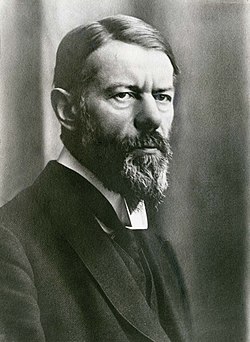
The full biography is on the public version →
Photograph by Ernst Gottmann, 1918. PD-old-auto-1923 (d. 1932) — Ernst Gottmann, 1918
These screens carry out this specific work. Every published work in the library also has at least an exercise — it is at the foot of this page.
Loading…
These works are related to the one you just read — and not by accident:
shared competencies: Continuity, Span and structure
shared competencies: Self-command, Continuity
shared competencies: Self-command, Span and structure
shared competencies: Self-command, Continuity
Opens in the member workspace — you need to be signed in.
The same work written at length: what it claims and what its evidence is worth.
This text is freely available, so the links go straight to it rather than to a summary of it.
- From Max Weber (Gerth and Mills) — the bureaucracy chapter in English
- Stanford Encyclopedia on Max Weber
Links open in a new window.