The works behind every gslk tool.
gslk is not a collection of advice. Every feature implements a specific, named work — with an author, a date and a source. The library runs from Sun Tzu and Xenophon to Ostrom and Edmondson, and every page ends the same way: what your club can do this week.
The honesty rule: where a model is contested, widely taught but weakly evidenced, or its instrument is commercially licensed, each page says so plainly. No claim here is stronger than its source allows, and every page states whether its primary source is in the public domain.
Every work grounds one or more of the ten gslk competency domains. Pick a domain to see who wrote about it — from antiquity to this century.
Leadership and character
Leading begins with a person who can first run themselves. The Stoics, Sun Tzu and modern behavioural models — on what a leader DOES rather than what a leader is.

Sun Tzu: know yourself and the other
Preparation decides the battle: whoever knows both themselves and the other in advance usually does not have to fight at all.

Seneca: time is the only real resource
You can get more money and more people. You cannot get more time, and it is the one thing nobody plans.
How an organisation is built
How a group of people becomes an institution that runs without its founder: span of control, functions, rules, the authority a subordinate grants, and handover to the next generation.
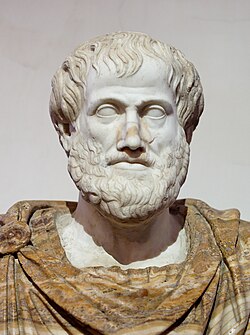
The economics of an organisation
Where the money comes from and where it goes; why organisations exist at all; and how a community governs what belongs to everyone.

Xenophon's Oeconomicus — the text the word "economics" comes from
Running an estate as a leadership virtue: order that others can find, and a steward you must train yourself.
Coase: why organisations exist at all
If the market allocates everything efficiently, why do people form organisations at all instead of buying every job from outside?
Ostrom: shared resources a community governs itself
Shared things do not have to be destroyed. Ostrom found eight conditions under which a community keeps its own resources alive for centuries — with no privatisation and no boss.
Williamson: which governance fits which transaction
Coase said organisations exist because of transaction costs. Williamson said how to choose: buy on the market, sign a long relationship, or do it yourself.
Drucker: management by objectives, and what an organisation is for
The purpose of an organisation always lies outside it — so doing the internal work well proves nothing by itself.
Osterwalder and Pigneur: the Business Model Canvas
Nine boxes on a single sheet showing how an organisation creates value, how it delivers it, and what it lives on.
Club money, legally: who may sign, and whose money is it
A club that is not a legal person cannot hold an account or sign a contract. Three routes follow from that, and only one of them is founding an association.
A club budget with no legal entity: planning, records, reporting, handover
A budget is an agreement: who may spend, up to how much, and who they show it to afterwards. In-kind support is budget too, and nobody counts it.
Finding sponsors: parama (charitable support), paid sponsorship, and reporting back afterwards
Parama — charitable support, with nothing given in return — paid sponsorship, and support in kind are three different things in Lithuanian law, and a club calls all three by one word. The difference decides who signs and whether an invoice is needed.
Impact and responsibility
Who besides your own club is better off — and to whom the organisation answers. From Cicero on duty to stakeholders and sustainability.
Speaking, writing, negotiating
An unspoken idea moves nothing. The canons of rhetoric, the rules of conversation, and negotiation that asks “why do you need that?” instead of arguing over positions.
The same work written for a member: what to do with it in the club.