The works behind every gslk tool.
gslk is not a collection of advice. Every feature implements a specific, named work — with an author, a date and a source. The library runs from Sun Tzu and Xenophon to Ostrom and Edmondson, and every page ends the same way: what your club can do this week.
The honesty rule: where a model is contested, widely taught but weakly evidenced, or its instrument is commercially licensed, each page says so plainly. No claim here is stronger than its source allows, and every page states whether its primary source is in the public domain.
Every work grounds one or more of the ten gslk competency domains. Pick a domain to see who wrote about it — from antiquity to this century.
Leadership and character
Leading begins with a person who can first run themselves. The Stoics, Sun Tzu and modern behavioural models — on what a leader DOES rather than what a leader is.
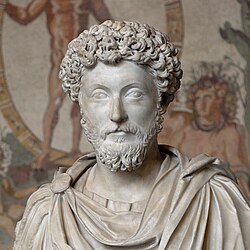
Marcus Aurelius: what is in your power
He ran an empire and still had to talk himself out of bed each morning. He kept the notes only for himself — so not one sentence in them is there to impress anybody.

Epictetus: the dichotomy of control
A former slave who became a teacher. His claim: events do nothing by themselves — what you think about them does.

Seneca: time is the only real resource
You can get more money and more people. You cannot get more time, and it is the one thing nobody plans.

Plutarch: character is revealed by deeds
A small thing done with nobody watching says more about a person than a battle won.
How an organisation is built
How a group of people becomes an institution that runs without its founder: span of control, functions, rules, the authority a subordinate grants, and handover to the next generation.

Confucius' Analects: transmit rather than reinvent
A leader who breaks his own rule announces, that same day, that here there are no rules.
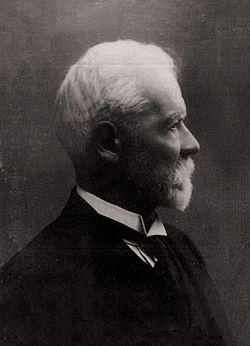
Fayol on the functions and principles of management
The first written list of what a manager actually does — and it is still repeated as if it were a law.
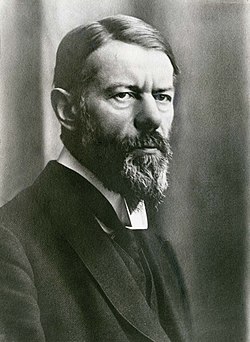
Weber on legitimate authority and bureaucracy
Rules and offices outlive even the most compelling founder. Weber thought that was both progress and a cage.
Barnard: the authority a subordinate grants
An instruction has force only if the person it is addressed to accepts it. In a volunteer club you see that every week.
Mintzberg: what managers actually do
When somebody sat beside real managers and wrote everything down, it turned out they barely plan — they talk, switch and firefight.
Katz: the three skills of an administrator
Three skills — technical, people, big picture — and the mix changes as you rise.
Impact and responsibility
Who besides your own club is better off — and to whom the organisation answers. From Cicero on duty to stakeholders and sustainability.
Speaking, writing, negotiating
An unspoken idea moves nothing. The canons of rhetoric, the rules of conversation, and negotiation that asks “why do you need that?” instead of arguing over positions.

Cicero's De Oratore: the five canons
First have something worth saying. Only then worry about how you will say it.
Grice's conversational maxims
What you chose to leave out is heard just as clearly as what you said.
Learning and teams
How people and teams actually learn, what gets in the way, and why points sometimes reduce the very willingness they are meant to reward.
Kolb's experiential learning cycle
Experience → reflection → conceptualisation → new action. A question structure for project debriefs, not a learning-style test.
Bandura's self-efficacy
Belief in your capability to do a specific thing. Its strongest source is a difficulty actually overcome, not encouragement.
Deci and Ryan’s self-determination theory
Autonomy, competence, relatedness. Plus the warning this platform needs most: points can reduce the very willingness they reward.
The same work written for a member: what to do with it in the club.