The works behind every gslk tool.
gslk is not a collection of advice. Every feature implements a specific, named work — with an author, a date and a source. The library runs from Sun Tzu and Xenophon to Ostrom and Edmondson, and every page ends the same way: what your club can do this week.
The honesty rule: where a model is contested, widely taught but weakly evidenced, or its instrument is commercially licensed, each page says so plainly. No claim here is stronger than its source allows, and every page states whether its primary source is in the public domain.
Every work grounds one or more of the ten gslk competency domains. Pick a domain to see who wrote about it — from antiquity to this century.
Leadership and character
Leading begins with a person who can first run themselves. The Stoics, Sun Tzu and modern behavioural models — on what a leader DOES rather than what a leader is.

How an organisation is built
How a group of people becomes an institution that runs without its founder: span of control, functions, rules, the authority a subordinate grants, and handover to the next generation.
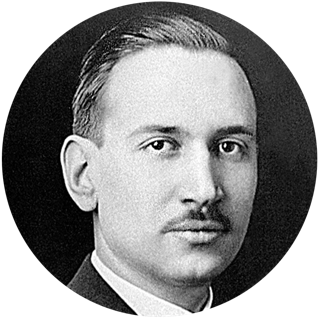
The Graičiūnas formula in practice
"Everything routes through me, I answer forty messages a night, and when I am ill nothing moves." That is not a character flaw. That is the formula, felt long before anyone counts it.
Succession: a relay, not a horse race
A planned, overlapping handover instead of a contest whose loser walks away with the knowledge.

Confucius' Analects: transmit rather than reinvent
A leader who breaks his own rule announces, that same day, that here there are no rules.
Polybius' mixed constitution: why good organisations decay with nobody to blame
The first generation earns its authority; the second is born holding it. The wheel starts turning down at the second.
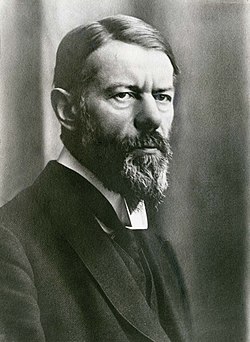
Weber on legitimate authority and bureaucracy
Rules and offices outlive even the most compelling founder. Weber thought that was both progress and a cage.
Strategy and choice
Seeing the situation as it actually is, and choosing what you will NOT do. From Machiavelli and Clausewitz to Porter and Rumelt.
Brand and value
What someone thinks of you when you are not in the room — and how that is grown on a zero budget. It is the same model this platform's own research measures.
The economics of an organisation
Where the money comes from and where it goes; why organisations exist at all; and how a community governs what belongs to everyone.

Impact and responsibility
Who besides your own club is better off — and to whom the organisation answers. From Cicero on duty to stakeholders and sustainability.
Speaking, writing, negotiating
An unspoken idea moves nothing. The canons of rhetoric, the rules of conversation, and negotiation that asks “why do you need that?” instead of arguing over positions.

Learning and teams
How people and teams actually learn, what gets in the way, and why points sometimes reduce the very willingness they are meant to reward.
The same work written for a member: what to do with it in the club.