The works behind every gslk tool.
gslk is not a collection of advice. Every feature implements a specific, named work — with an author, a date and a source. The library runs from Sun Tzu and Xenophon to Ostrom and Edmondson, and every page ends the same way: what your club can do this week.
The honesty rule: where a model is contested, widely taught but weakly evidenced, or its instrument is commercially licensed, each page says so plainly. No claim here is stronger than its source allows, and every page states whether its primary source is in the public domain.
Every work grounds one or more of the ten gslk competency domains. Pick a domain to see who wrote about it — from antiquity to this century.
Leadership and character
Leading begins with a person who can first run themselves. The Stoics, Sun Tzu and modern behavioural models — on what a leader DOES rather than what a leader is.

Sun Tzu: know yourself and the other
Preparation decides the battle: whoever knows both themselves and the other in advance usually does not have to fight at all.
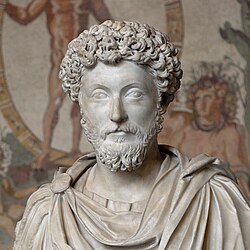
Marcus Aurelius: what is in your power
He ran an empire and still had to talk himself out of bed each morning. He kept the notes only for himself — so not one sentence in them is there to impress anybody.

Seneca: time is the only real resource
You can get more money and more people. You cannot get more time, and it is the one thing nobody plans.
How an organisation is built
How a group of people becomes an institution that runs without its founder: span of control, functions, rules, the authority a subordinate grants, and handover to the next generation.
Polybius' mixed constitution: why good organisations decay with nobody to blame
The first generation earns its authority; the second is born holding it. The wheel starts turning down at the second.
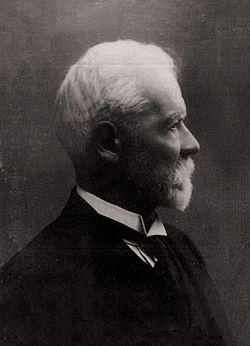
Fayol on the functions and principles of management
The first written list of what a manager actually does — and it is still repeated as if it were a law.
Mintzberg: what managers actually do
When somebody sat beside real managers and wrote everything down, it turned out they barely plan — they talk, switch and firefight.
Strategy and choice
Seeing the situation as it actually is, and choosing what you will NOT do. From Machiavelli and Clausewitz to Porter and Rumelt.

The Prince: power as it actually is
Not a handbook of cynicism but a demand to look honestly: first see who actually holds power, only then decide what to do.

Clausewitz: friction, uncertainty, and a purpose set from outside
The gap between the plan and the execution is made by friction — the small things no plan ever counts. And no means can state its own purpose: that is always set from outside it.
Porter's five forces and the choice of position
Five forces shape profitability, and rivals are only one of them. Strategy begins when you choose what you will NOT be.
Mintzberg: a plan is not a strategy
Most strategy forms while you act, and only afterwards does somebody write it down. A written plan does not mean a strategy exists.
Rumelt: the kernel, and the signs of bad strategy
Strategy is not a list of goals. It has three parts: diagnosis, guiding policy, coherent action. Without a diagnosis, it is a wish list.
Brand and value
What someone thinks of you when you are not in the room — and how that is grown on a zero budget. It is the same model this platform's own research measures.
Customer-Based Brand Equity
Brand equity is the difference made by what a person already knows about you. That knowledge has two components: awareness and image.
University Brand Equity: Core and Supporting
Emotional environment is one of the core dimensions of a university's brand. That is exactly where a student club works.
Marketing Myopia
The railroads decided they were in the railroad business. While they thought that, their passengers moved to cars and planes.
Speaking, writing, negotiating
An unspoken idea moves nothing. The canons of rhetoric, the rules of conversation, and negotiation that asks “why do you need that?” instead of arguing over positions.

Learning and teams
How people and teams actually learn, what gets in the way, and why points sometimes reduce the very willingness they are meant to reward.
The same work written for a member: what to do with it in the club.